
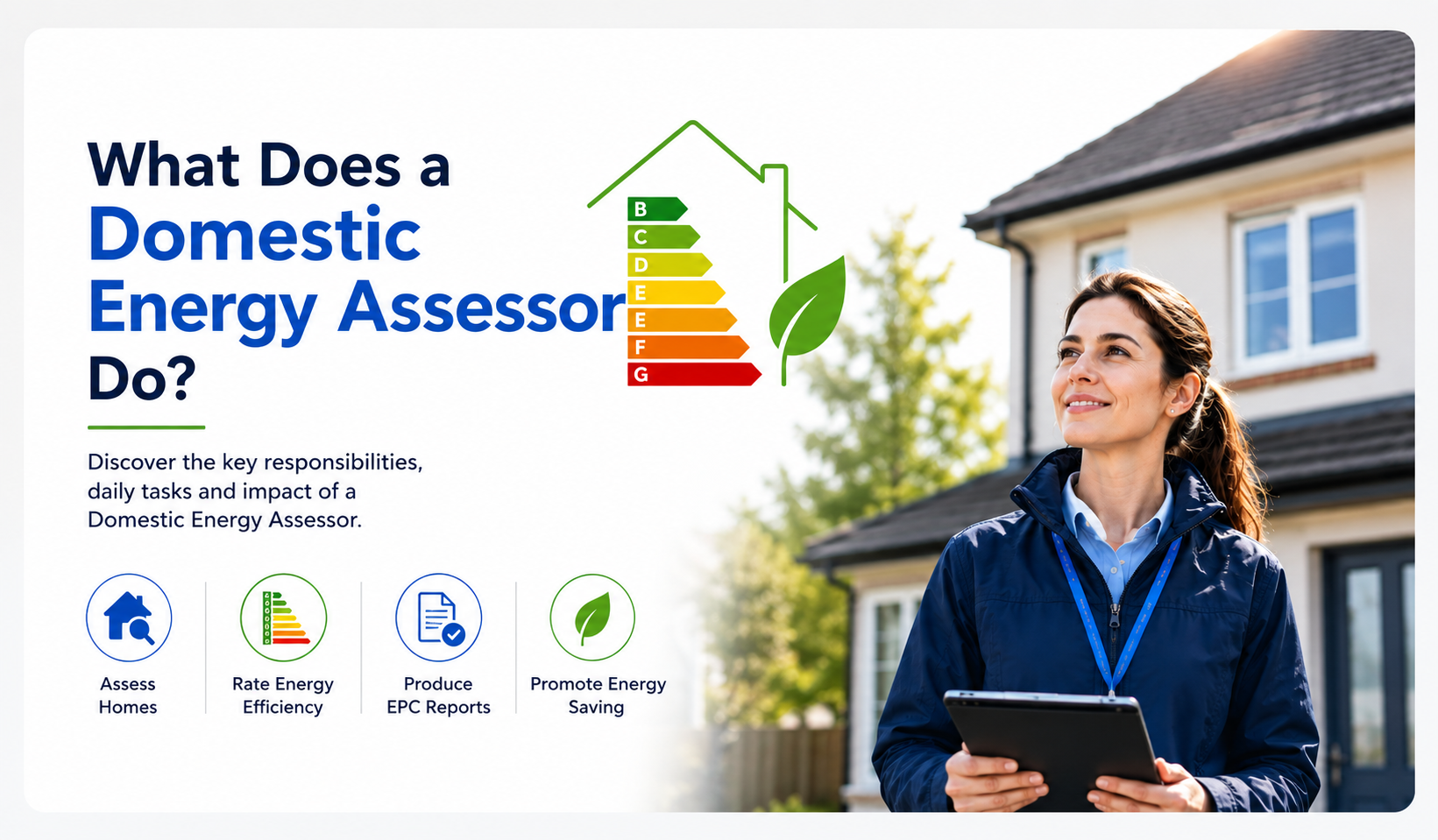
What Does a Domestic Energy Assessor Do?
What Does a Domestic Energy Assessor Do? heading
If you're thinking about becoming a Domestic Energy Assessor (DEA), you may be wondering what the role involves on a day-to-day basis.
Domestic Energy Assessors help homeowners, landlords, estate agents and property professionals understand the energy efficiency of residential properties. They inspect homes, collect information and produce Energy Performance Certificates (EPCs), helping people make informed decisions about improving energy performance.
At Ozone Group Training, we help learners gain the knowledge and practical skills needed to begin a successful career as a Domestic Energy Assessor.
What Is a Domestic Energy Assessor?
A Domestic Energy Assessor is a qualified professional who assesses the energy efficiency of residential properties such as:
- Houses
- Flats
- Bungalows
- New-build homes
- Rental properties
Their main responsibility is to produce an Energy Performance Certificate (EPC), which rates the property's energy efficiency and provides recommendations for improvement.
What Does a Domestic Energy Assessor Do Each Day?
A typical day may include:
- Visiting residential properties.
- Measuring rooms and floor areas.
- Recording construction details.
- Assessing insulation levels.
- Inspecting heating and hot water systems.
- Checking windows and glazing.
- Photographing key features where required.
- Entering property data into approved EPC software.
- Producing Energy Performance Certificates.
Each assessment follows recognised industry standards to ensure accurate and consistent results.
Where Do Domestic Energy Assessors Work?
Domestic Energy Assessors may work with:
- Estate agents
- Letting agents
- Homeowners
- Landlords
- Housing associations
- Local authorities
- Property management companies
- EPC providers
Some assessors are employed full-time, while others choose to become self-employed and manage their own clients.
Skills You'll Need
Successful Domestic Energy Assessors typically have:
- Good attention to detail
- Communication skills
- Basic computer skills
- Confidence working independently
- Organisational skills
- An interest in property and sustainability
- Professional customer service
These skills help ensure assessments are completed accurately and professionally.
What Equipment Does a Domestic Energy Assessor Use?
During property inspections, a Domestic Energy Assessor may use:
- A laser distance measurer
- A tape measure
- A digital camera or smartphone
- A tablet or laptop
- Approved EPC software
- Personal protective equipment (PPE), where appropriate
Using the correct tools helps improve efficiency and accuracy during inspections.
Is Every Day Different?
Yes.
One day you might assess a modern apartment, while the next you could be inspecting a traditional detached house or a rental property.
This variety makes the role interesting and allows assessors to work with different property types across the UK.
Can You Become Self-Employed?
Yes.
Many Domestic Energy Assessors choose to work independently. This allows them to:
- Set their own working hours.
- Build relationships with estate agents and landlords.
- Grow their own business.
- Choose the areas they wish to cover.
Self-employment also involves managing appointments, invoices and marketing.
Career Progression
Many Domestic Energy Assessors expand their careers by gaining additional qualifications, including:
- Commercial (Non-Domestic) Energy Assessor
- Retrofit Assessor
- Retrofit Coordinator
- SAP Assessor
- Air Tightness Tester
Additional qualifications can open up new career opportunities and allow you to offer a wider range of services.
How Can Ozone Group Training Help?
At Ozone Group Training, we provide industry-focused training designed to prepare learners for a successful career in domestic energy assessment.
Our courses offer:
- Experienced tutors
- Practical learning
- Flexible study options
- Ongoing learner support
- Career-focused training
Whether you're starting a new career or developing your existing skills, we're here to help you take the next step.