
Level 3 Domestic Energy Assessor Course Syllabus
View the modules and learning outcomes included in the Level 3 Domestic Energy Assessor qualification. This syllabus applies to all Ozone Group DEA delivery options, including self-paced, live online, weekend and classroom training.
The Level 3 Domestic Energy Assessor course provides the knowledge and practical skills required to assess existing domestic properties and produce Energy Performance Certificates. All Ozone Group DEA courses follow the same qualification syllabus, regardless of whether you choose self-paced guided learning, live online training, weekend training or classroom delivery.
Modules in the course
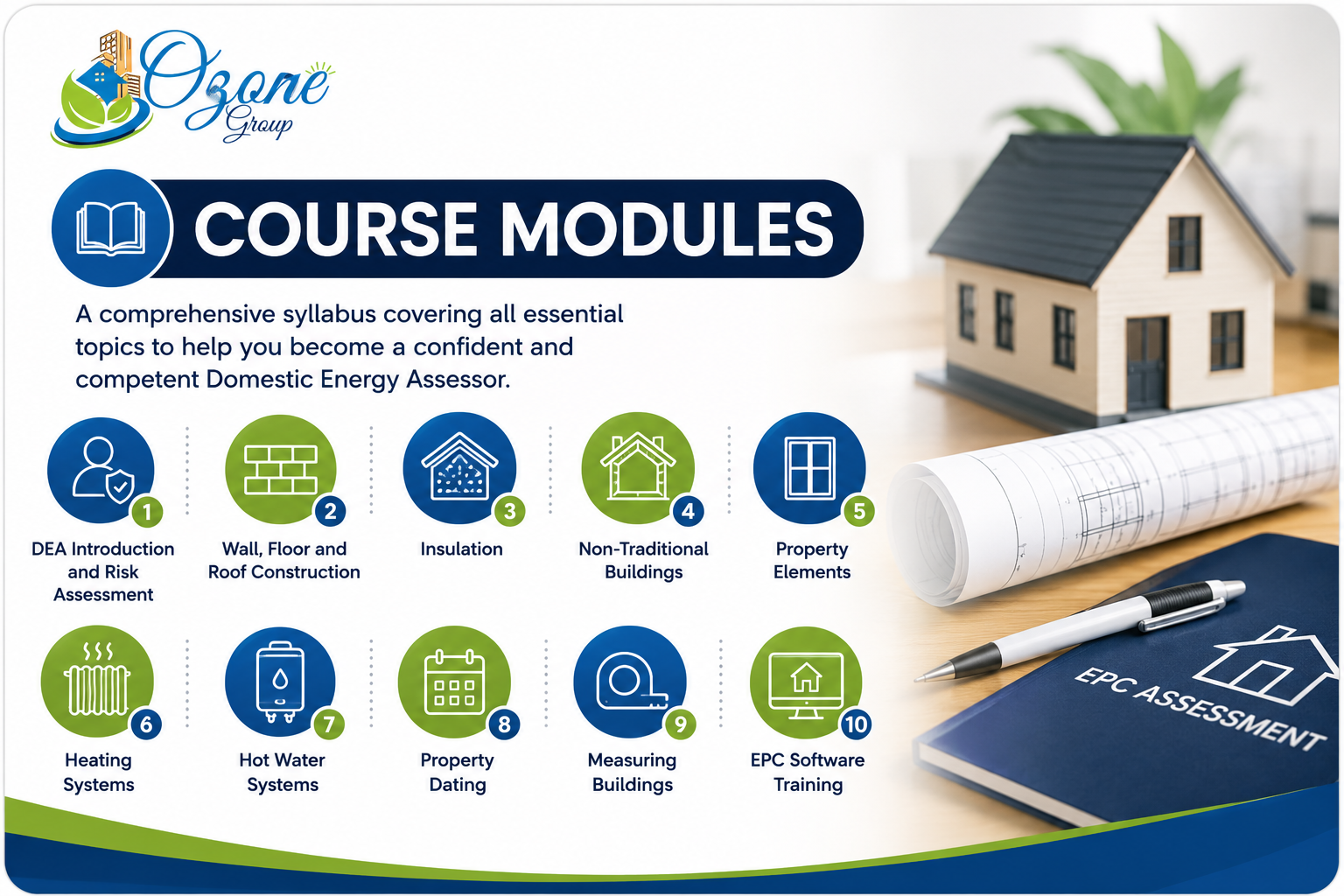
The following modules are included within the Level 3 Domestic Energy Assessor course. Each module is designed to build the technical knowledge and practical understanding required to carry out domestic energy assessments accurately and professionally.
- ✓DEA Introduction and Risk Assessment
- ✓Wall, Floor and Roof Construction
- ✓Insulation
- ✓Non-Traditional Buildings
- ✓Property Elements
- ✓Heating Systems
- ✓Hot Water Systems
- ✓Property Dating
- ✓Measuring Buildings
- ✓EPC Software Training
Module 1 – DEA Introduction and Risk Assessment
This module introduces the role and responsibilities of a Domestic Energy Assessor, including the importance of professionalism, health and safety, and conducting effective risk assessments before visiting a property. You will gain an understanding of the domestic energy assessment process and the standards required for EPC surveys.
Module 2 – Wall, Floor and Roof Construction
Develop an understanding of the different types of wall, floor and roof construction commonly found in domestic properties throughout the UK. You will learn to accurately identify construction methods and understand how they influence a property's energy performance and EPC rating.
Module 3 – Insulation
Explore the various forms of insulation used within domestic buildings, including loft, cavity wall, solid wall and floor insulation. This module explains how insulation improves energy efficiency, reduces heat loss and contributes to achieving higher EPC ratings.
Module 4 – Non-Traditional Buildings
Learn how to recognise and assess non-traditional construction methods, including timber frame, steel frame and system-built properties. The module explains the challenges associated with assessing these property types and how they should be recorded within an EPC assessment.
Module 5 – Property Elements
Gain a comprehensive understanding of the key elements that make up a domestic property, including windows, doors, glazing, extensions and other building features. You will learn how each element contributes to a home's overall energy efficiency.
Module 6 – Heating Systems
Study the different heating systems installed within domestic properties, including gas, oil, electric and renewable technologies. You will learn how to identify heating systems correctly and understand their impact on SAP calculations and EPC ratings.
Module 7 – Hot Water Systems
This module covers the different methods of domestic hot water production, storage and distribution. You will understand how hot water systems contribute to a property's energy performance and how they should be recorded during an assessment.
Module 8 – Property Dating
Learn how to determine the approximate construction age of domestic properties using recognised age bands and construction characteristics. Correctly identifying a property's age is essential for producing accurate SAP calculations and Energy Performance Certificates.
Module 9 – Measuring Buildings
Develop the practical skills required to accurately measure domestic properties using industry-standard conventions. You will learn how to calculate floor areas, identify heat loss perimeters and produce accurate measurements for EPC software.
Module 10 – EPC Software Training
Gain hands-on experience using industry-standard EPC software to produce Energy Performance Certificates. This module covers entering survey data, selecting construction details, generating recommendations, reviewing calculations and producing compliant EPC reports with confidence.
Portfolio & Assessments
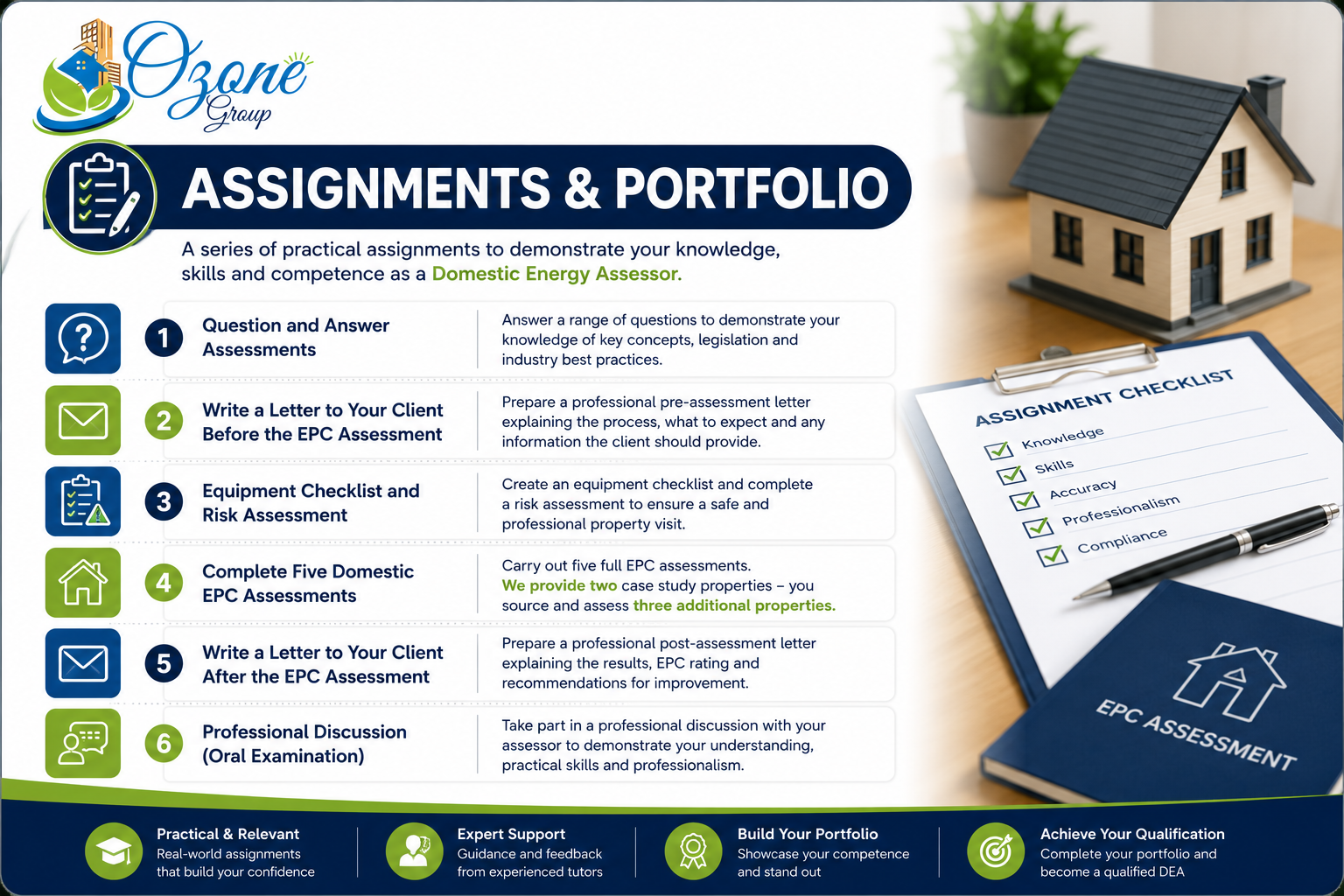
To successfully achieve the Level 3 Domestic Energy Assessor qualification, learners must complete a portfolio of practical work and supporting assignments that demonstrate their knowledge and competence in carrying out domestic energy assessments.
The portfolio includes:
- Question and Answer Assessments – Demonstrate your understanding of domestic energy assessment principles, legislation and industry best practices through a series of written questions.
- Write a Letter to Your Client Before the EPC Assessment – Prepare a professional pre-appointment letter explaining the assessment process, what the client can expect and any information they should provide before the visit.
- Equipment Checklist and Risk Assessment – Produce an equipment checklist and complete a risk assessment to ensure you are fully prepared to carry out a safe and professional domestic property survey.
- Complete Five Domestic EPC Assessments – Gain real-world experience by completing five full Domestic EPC assessments. To make the process easier, Ozone Group supplies two fully prepared case study properties, leaving you to complete just three assessments on properties you source yourself. These can be your own home or properties belonging to friends or family, giving you the flexibility to complete the practical element at your own pace.
- Write a Letter to Your Client After the EPC Assessment – Produce a professional post-assessment letter explaining the EPC results, energy efficiency rating and recommendations for improving the property's performance.
- Question and Answer Assessments – Complete a series of written question-and-answer assessments covering domestic energy assessment principles, legislation, and industry best practices. After each submission, your assessor will provide constructive feedback to support your learning and development. There is no limit on the number of resubmissions, giving you the opportunity to improve your answers and achieve the required standard with confidence.
Throughout your qualification, your dedicated tutor will provide guidance and feedback to help you successfully complete each assignment and build a portfolio that meets the awarding body's assessment requirements.
Have Questions About the Course?
If you would like to learn more about the Level 3 Domestic Energy Assessor qualification, discuss the different training options, or find out which course is right for you, our friendly team is here to help. Whether you have questions about entry requirements, course delivery, assessments, funding or career opportunities, we'll be happy to provide honest advice and guide you through the enrolment process.
Contact Our Training Team